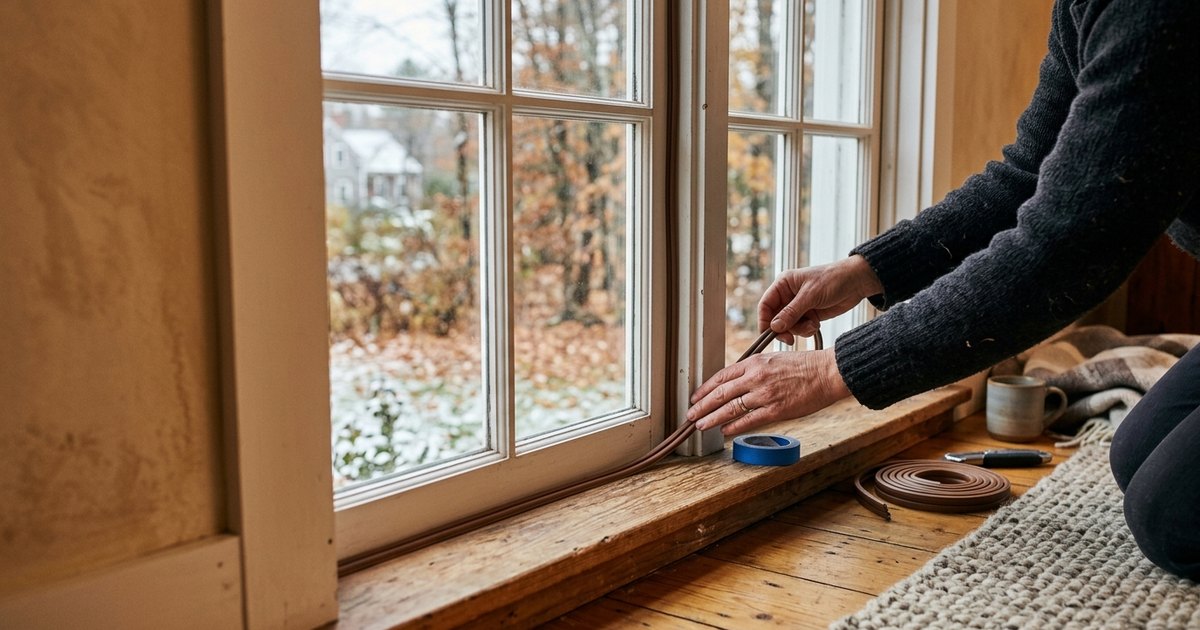
As fall settles in across the country, drafty doors and leaky windows can send your heating bill through the roof. The good news: most winterizing tasks are straightforward DIY projects that take a weekend afternoon and cost far less than a month of wasted energy. Here's exactly what to do, what it costs, and when it's smarter to call a pro.
Inspect First — Know What You're Dealing With
Before buying supplies, do a thorough inspection. Skipping this step means guessing, and guessing wastes money.
- The candle or incense test: On a windy day, hold a lit candle or stick of incense near door frames, window edges, and sills. Flickering flame = air leak.
- Feel with your hand: Run your hand slowly along the perimeter of closed windows and doors. Even slight cold air is a problem.
- Check weatherstripping: Look for cracked, compressed, or missing foam/rubber strips around door edges and window sashes.
- Inspect caulk: Old caulk shrinks and cracks. Look for gaps between window frames and the exterior siding or interior drywall.
- Check door thresholds: Slide a piece of paper under a closed exterior door. If it slides freely, you're losing heat.
- Look for condensation: Fogging between double-pane glass means the seal is broken — a job for a glass pro, not caulk.
Take notes or photos as you go. This gives you a shopping list and helps you decide which tasks to tackle yourself.
Weatherstripping: The Quickest Win
Replacing weatherstripping is one of the highest-return DIY tasks you can do. It typically costs $10–$30 per door or window depending on the material and size.
Types of weatherstripping:
- Foam tape (V-strip or open-cell foam): Cheapest option, typically $3–$8 per pack. Best for sliding windows or low-traffic doors. Compresses over time.
- Door sweeps: Mount to the bottom of the door to seal the gap with the threshold. Self-adhesive sweeps run $8–$15; screw-in versions are sturdier at $15–$30.
- Rubber or vinyl compression strips: Durable, good for doors and double-hung windows. Typically $10–$25 for a door kit.
- Bronze V-strip: Long-lasting metal option, typically $12–$20, great for older wood windows.
How to install: Remove old strips completely, clean the surface with rubbing alcohol, let it dry, and press or screw the new strip in place. Door sweeps on exterior doors should just brush the threshold — too tight and the door drags; too loose and cold air sneaks in.
Caulking Windows and Door Frames
Caulk fills the static gaps where framing meets siding, drywall, or masonry. Unlike weatherstripping, caulk is for surfaces that don't move.
- Use a paintable latex/silicone blend for interior window trim — it cleans up with water and you can paint over it.
- Use 100% silicone or exterior acrylic caulk for outside applications. It handles temperature swings without cracking.
- A tube of caulk typically costs $4–$10. A standard caulk gun runs $5–$15.
- Remove old caulk first using a utility knife or plastic scraper. Apply in a slow, steady bead, then smooth with a wet finger or caulk tool.
- Caulk when temps are above 40°F and rain isn't expected for 24 hours.
> Safety note: When working on exterior upper-story windows, use a stable ladder rated for your weight. Never overreach — move the ladder instead.
Window Film and Draft Snakes for Extra Insulation
For windows that are older but not yet ready for replacement, insulating film kits add a measurable layer of protection.
- Shrink film kits (like those from 3M or Duck Brand) cost $15–$30 for multiple windows. You apply double-sided tape to the frame, press the film over it, and use a hair dryer to shrink it tight. Nearly invisible when done right.
- Draft snakes (fabric tubes placed at the base of doors) are a no-tool solution, typically $8–$15 or free if you fill an old tube sock with dry rice.
- Thermal curtains add insulation value and run $20–$80 per panel pair — a good option for large, drafty picture windows.
Film is not a permanent fix, but it can cut heat loss through a single-pane window noticeably and buys time before replacement.
When to DIY vs. When to Hire a Handyman
Most weatherstripping and caulking projects are genuinely homeowner-friendly. But some situations call for a professional.
DIY is fine when:
- Weatherstripping is peeling or compressed but the frame is solid
- You can see hairline gaps in caulk around window trim
- You're adding a door sweep to a standard exterior door
- Installing plastic window film kits
Hire a pro when:
- The door frame or window frame is rotted or structurally damaged
- A double-pane window has lost its seal (foggy glass between panes)
- The door doesn't hang or close squarely — it needs re-hanging or shimming
- You're replacing an exterior door unit entirely
- Working at height makes you uncomfortable
For jobs that go beyond basic supplies, a handyman can typically handle door re-hanging, threshold replacement, or window resealing for $75–$250 depending on scope. If you need a hand, FixFinder connects you with vetted, background-checked local handymen who send quotes — you only pay when the job is done.
Exterior Door Threshold and Storm Door Tips
Don't overlook the threshold — the metal or wood strip your door closes against.
- Adjustable thresholds have screws that raise or lower the seal height. If your door drags or lets air in, try adjusting before replacing.
- Replacement thresholds typically cost $20–$60 at a hardware store and take about an hour to swap out.
- Storm doors add a second barrier and can reduce heat loss through an entry door significantly. Budget $150–$400 for the door itself, plus $75–$150 for professional installation if you prefer.
- Make sure storm door closers are adjusted — a door that doesn't latch firmly is no better than no storm door.
FAQ
Q: How much can I realistically save by winterizing my doors and windows?
According to the U.S. Department of Energy, air sealing and weatherstripping can cut heating and cooling costs by 10–20%. In a typical home paying $150/month in winter heating, that's potentially $15–$30 saved each month — often covering your material costs in a single season.
Q: What's the best caulk for exterior windows?
For exterior use, choose a paintable silicone-latex blend or 100% silicone caulk rated for exterior temperatures. Brands like DAP and GE Sealants are widely available and reliable. Avoid plain latex caulk outdoors — it shrinks and cracks faster in freeze-thaw conditions common in winter seasons.
Q: Can I winterize windows that are single-pane without replacing them?
Yes — plastic film kits and thermal curtains both help meaningfully with single-pane windows. They won't match the performance of a modern double-pane window, but they reduce drafts and condensation noticeably. If budget allows, replacing single-pane windows is worth planning as a longer-term investment.
Q: How do I find a reliable handyman for window or door work?
Word of mouth is always a start, but vetting strangers is hard. FixFinder makes it easier — homeowners post their job for free, local handymen who've passed background checks send quotes, and payment only happens after the work is complete. It takes the guesswork out of finding someone trustworthy.
Get it fixed
If your doors or windows need more than a DIY fix this fall, post your job free on FixFinder and get quotes from vetted local handymen — no payment until the job is done.
Questions from homeowners (0)
Ask anything about this guide. Vetted FixFinder handymen answer.
Sign in as a homeowner to ask a question.