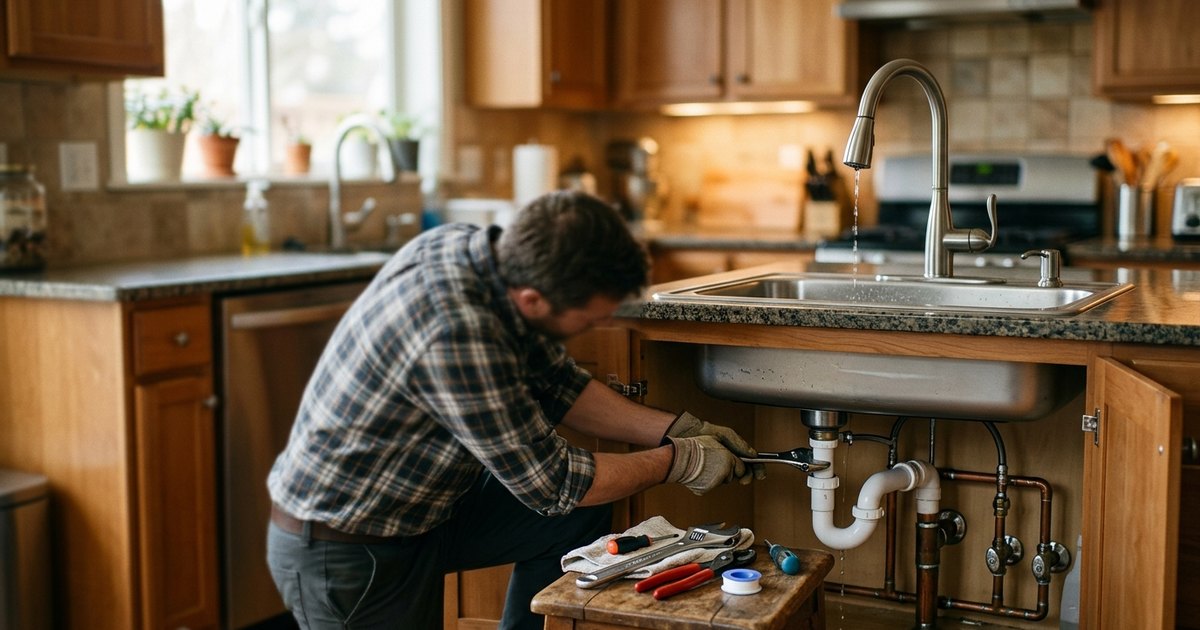
A dripping faucet at 10 p.m. or a slow drain on a busy morning, plumbing problems always seem to show up at the worst time. The real question is whether to grab your toolbox or pick up the phone. Getting that call right saves you money, prevents water damage, and keeps your home safe through the years.
How to Read the Situation Before You Touch Anything
Before you decide, take an honest look at what's happening. A few quick checks can save you from making things worse:
- Water still running? Locate your main shut-off valve and turn it off before touching any supply line.
- Smell gas? Leave the house immediately and call your gas utility—never attempt a DIY fix.
- Standing water near the water heater or under the sink? That's a sign of a pressurized leak, not a simple drip.
- How old is your plumbing? Homes built before the 1980s may have galvanized steel or polybutylene pipes that need a professional eye.
Safety note: Always turn off the water supply to the affected fixture before starting any repair. If you're not sure where the shut-off is, find it now and not during an emergency.
Plumbing Jobs You Can Safely DIY
Some repairs are genuinely beginner-friendly and cost very little beyond a hardware store run:
- Replacing a faucet aerator or showerhead – Tools needed: adjustable wrench, plumber's tape. Cost: $10–$30 in parts.
- Unclogging a drain – A drain snake or a mix of baking soda and white vinegar handles most bathroom clogs. Avoid chemical drain cleaners on older pipes. Cost: $0–$25.
- Fixing a running toilet – Flapper valves and fill valves are inexpensive and take about 20 minutes to swap out. Parts typically run $8–$20.
- Replacing a toilet seat – No plumbing experience needed. Cost: $15–$60.
- Tightening compression fittings under a sink – If the leak is at the supply line connection and you can see the nut, a quarter-turn with a wrench often fixes it.
DIY is smart here because the parts are cheap, the repairs are low-stakes, and plenty of clear video tutorials exist. If the fix doesn't hold after one attempt, stop and call a pro—repeated amateur attempts can strip fittings or crack older pipes.
Plumbing Jobs That Require a Licensed Pro
Some work carries real risk of flooding, code violations, or voiding your homeowner's insurance:
- Main line clogs or sewer backups – Sewage coming up through floor drains means a blockage deep in the line. Hydro-jetting or camera inspection is needed. Typically $150–$500.
- Water heater replacement or repair – Involves gas lines, electrical connections, or both. Improper installation is a carbon monoxide and explosion hazard. Typical cost: $800–$1,800 installed.
- Pipe replacement – Corroded, cracked, or frozen-and-burst pipes need a licensed plumber. Expect $200–$1,000+ depending on pipe length and access.
- Any work that requires a permit – Many plumbing jobs (new lines, water heater installs, drain rerouting) legally require a licensed contractor and permit.
- Leak inside a wall or under a slab – These require leak-detection equipment and often involve opening walls or concrete. Typically $500–$2,500 depending on scope.
Safety note: Gas-line work is never a DIY project under any circumstances. Most laws requires licensed contractors for gas line repairs.
What Plumbing Repairs Typically Cost
Labor rates in rural towns tend to run lower than big-city averages, but parts costs are similar nationwide:
| Repair | Typical DIY Cost | Typical Pro Cost | |---|---|---| | Faucet repair/replacement | $15–$80 (parts) | $100–$250 | | Toilet flapper/fill valve | $8–$20 (parts) | $75–$150 | | Drain snaking (pro) | — | $100–$250 | | Water heater replacement | Not recommended DIY | $800–$1,800 | | Burst pipe repair | Not recommended DIY | $200–$1,000+ | | Sewer line clearing | Not recommended DIY | $150–$500 |
Always get at least two quotes for jobs over $200. A vetted handyman through a platform like FixFinder can handle many general plumbing repairs—think fixture swaps, minor leaks, and drain work—at rates that are often lower than calling a full plumbing company.
Fall-Specific Plumbing Tips Homeowners
Fall is the best time to prevent the expensive winter problems that come with Missouri's freezing temperatures:
- Disconnect and drain garden hoses before the first freeze. A connected hose traps water and can crack your outdoor spigot.
- Insulate exposed pipes in unheated spaces like garages, crawl spaces, and exterior walls. Pipe insulation foam costs about $0.50 per foot.
- Test your sump pump before heavy fall rains. Pour a bucket of water into the pit—it should kick on immediately.
- Check your water heater anode rod if the unit is more than five years old. Fall is a good time for a flush and inspection before the unit works harder in cold weather.
- Know where your main shut-off is before the ground freezes and you can't easily access it.
When a Handyman Can Bridge the Gap
Not every plumbing call needs a licensed master plumber. Many common repairs—faucet replacements, toilet installs, supply line swaps, minor fixture work—fall squarely in the category of general repair that a skilled handyman handles every day. If the job doesn't involve moving existing drain lines, working on gas, or pulling a permit, a handyman is often faster to schedule and more affordable.
FixFinder connects homeowners with background-checked local handymen who send competitive quotes. You only pay when the job is done, so there's no risk in posting your project and seeing what comes back.
FAQ
Can I fix a leaking pipe under my sink myself? It depends on where the leak is. If it's at a slip-joint connection on the drain (the plastic or chrome P-trap), you can often hand-tighten or replace the fitting yourself for under $10. If the leak is on a supply line—the braided metal lines running to the faucet—and the fitting is cracked or corroded, replace the whole line (about $10–$20 at any hardware store). If tightening doesn't stop the drip after one try, call a pro to avoid making the fitting worse.
How do I know if my water heater needs to be replaced versus repaired? Age is the biggest factor. Most tank water heaters last 8–12 years. If yours is near that range and showing problems (rust-colored water, rumbling sounds, pooling water at the base), replacement is usually more cost-effective than repair. A failing heating element or thermostat on a newer unit, however, is typically worth repairing—parts run $20–$50 and a plumber can swap them in under an hour.
Is it legal to do my own plumbing? Homeowners in most states can legally do plumbing work on their own primary residence in many cases, but some work requires a permit even for DIY projects. Permit requirements vary by city and county. In practice, any work involving new drain lines, water heater installs, or changes to the main supply line should be checked with your local building department first. Unpermitted work can create problems when you sell the home.
What's the fastest way to find a reliable plumber or handyman? Ask neighbors for referrals, check your Secretary of State's license lookup for plumbers, or post your job on FixFinder to get quotes from vetted, background-checked local handymen quickly. For licensed plumbing work, verify the contractor holds a current state plumbing license before any work begins.
Get it fixed
Ready to stop guessing and get a real quote? Post your job free on FixFinder and hear from background-checked handymen today.
Questions from homeowners (0)
Ask anything about this guide. Vetted FixFinder handymen answer.
Sign in as a homeowner to ask a question.