Fall means dropping temps, occasional ice, and the very real risk of burst pipes, drafty rooms, and sky-high heating bills if you put off winterizing. This checklist walks you through the most important tasks, what they cost, which ones you can tackle yourself, and when it pays to call a handyman.
Plumbing: Protect Your Pipes Before the First Freeze
Burst pipes are one of the most expensive winter repairs, and they're almost entirely preventable.
- Disconnect and drain garden hoses. A hose left attached traps water in the spigot and the pipe behind it. DIY, five minutes.
- Shut off and drain outdoor hose bibs. Older homes often lack frost-proof spigots. A handyman can replace a standard bib with a frost-proof model — typically $80–$180 per spigot, including parts.
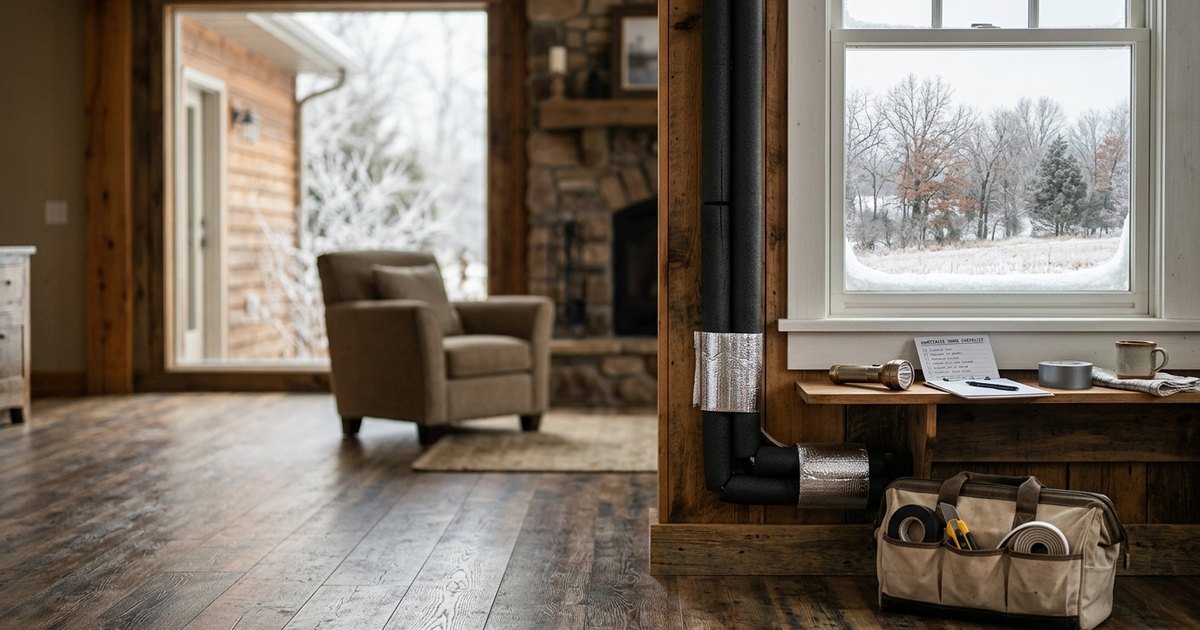
- Insulate exposed pipes in crawl spaces, garages, and unheated basements. Foam pipe insulation sleeves run about $1–$3 per linear foot at any hardware store; this is easy DIY. For hard-to-reach crawl spaces, hire out.
- Locate your main water shut-off. Know where it is before a pipe bursts at 2 a.m.
- Safety note: If you leave town for more than a few days in winter, keep the heat set to at least 55°F, or shut off the main and drain the lines.
Heating System Tune-Up
Your furnace has been sitting idle since spring. Before you need it, make sure it's ready.
- Replace the furnace filter. A clogged filter strains the blower motor and raises your energy bill. Filters cost $8–$30 depending on MERV rating. Change it every 1–3 months during heating season.
- Schedule an HVAC tune-up. An HVAC technician (or a skilled handyman who services furnaces) will inspect the heat exchanger, check gas connections, test the thermostat, and clean the burner. Expect to pay $80–$150 for a standard tune-up.
- Bleed baseboard radiators if you have a hot-water system. Trapped air causes cold spots. DIY with a radiator key (under $5) — just have a towel ready.
- Test carbon monoxide and smoke detectors and replace batteries. CO detectors should be replaced every 5–7 years. This is a non-negotiable safety step.
- Check the flue and chimney if you have a gas or wood-burning fireplace. A handyman can inspect and clean a fireplace flue for typically $100–$250; a certified chimney sweep for a wood-burning fireplace is recommended.
Sealing Air Leaks: Windows, Doors, and Attic
Drafts account for up to 30% of heating energy loss, according to the U.S. Department of Energy.
- Weatherstrip exterior doors. Hold a piece of paper against the door edge and close it — if the paper slides out easily, you're losing heat. Weatherstrip kits run $15–$40 and are straightforward DIY.
- Apply or replace window caulk. Inspect the exterior caulk around every window frame. A tube of exterior caulk costs about $6–$10; a handyman can re-caulk all your windows and doors for typically $100–$300 depending on the number of windows.
- Add door sweeps to exterior doors. Easy DIY; parts are under $20.
- Check attic insulation. Most homes should ideally have R-38 to R-60 in the attic. Blown-in insulation added by a handyman or insulation contractor typically runs $1.50–$3.50 per square foot installed. This pays back in lower heating bills within a few seasons.
- Seal around electrical outlets on exterior walls using foam gaskets (sold in packs of 10 for under $5). Takes 20 minutes; big heat savings.
Gutters and Exterior Drainage
Ignoring gutters in fall leads to ice dams and water damage in winter.
- Clean gutters and downspouts. Leaves and debris cause water to back up and freeze under shingles. A handyman typically charges $100–$250 to clean gutters on a single-story home, more for two-story. DIY is possible on a single story with a sturdy ladder — always use a spotter and non-slip ladder feet.
- Check that downspouts direct water at least 4 feet away from the foundation.
- Inspect the roof for missing or damaged shingles. Don't walk the roof yourself unless you're experienced and use proper fall protection. A handyman or roofer can do a visual inspection and minor repairs — patch work typically runs $150–$400.
- Disconnect and store patio furniture, grills, and hoses to prevent freeze damage.
Interior Checks: Attic, Basement, and Garage
- Attic vents should be clear of insulation blockage so moisture doesn't build up and cause mold.
- Check basement window wells for debris. Install clear plastic covers (about $20–$40 each) to keep out snow and rain.
- Insulate your water heater with a tank blanket if it's in an unheated garage — blankets cost $25–$50 and can cut standby heat loss by 25–45%. Check the manufacturer's instructions first; some newer units don't need them.
- Test your sump pump by pouring a bucket of water into the pit. If it doesn't kick on, a handyman can inspect or replace it — service calls typically run $75–$150, and a new pump installed runs $300–$600.
- Reverse ceiling fans to clockwise on low speed. This pushes warm air pooled near the ceiling back down. Free and takes 10 seconds.
What to DIY vs. What to Hand Off
| Task | DIY? | Hire a Handyman? | |---|---|---| | Replace furnace filter | ✅ Yes | | | Weatherstrip a door | ✅ Yes | | | Re-caulk multiple windows | Maybe | ✅ If many windows | | Install frost-proof hose bib | | ✅ Yes | | Clean gutters (2-story) | ⚠️ Risky | ✅ Yes | | Inspect roof | ⚠️ Risky | ✅ Yes | | Furnace tune-up | | ✅ Yes | | Blown-in insulation | | ✅ Yes |
A good rule: if the job involves a ladder above one story, gas lines, or the roof, hire a pro. For most homeowners, using a platform like FixFinder makes it simple — post your winterizing jobs, get quotes from vetted local handymen, and pay only when the work is done.
FAQ
When should I start winterizing my home?
Start in early to mid-fall — ideally before temperatures regularly drop below 40°F at night. Some states can see its first hard freeze anywhere from late October through November, so getting tasks done in September and October gives you a comfortable buffer. Booking a handyman early also means more availability and often better scheduling flexibility.
How much does it cost to winterize a home?
For a typical home a full winterization covering plumbing insulation, weatherstripping, gutter cleaning, and a furnace tune-up typically runs $300–$800 in total handyman labor, plus any parts. If you DIY the simple tasks and hire out only the skilled work, you can stay closer to $150–$400. The investment is almost always far less than a single burst-pipe repair, which can easily cost $1,000–$5,000 or more.
How do I find a reliable handyman?
Look for someone who is background-checked, has verifiable reviews, and can provide references or photos of similar work. FixFinder vets every handyman on its platform and lets you compare quotes before committing. You only pay when the job is complete, which takes the financial risk out of hiring someone new.
Can one handyman handle the whole winterize checklist?
Often, yes. Many general repair handymen are comfortable handling weatherstripping, caulking, minor plumbing insulation, gutter cleaning, and basic furnace filter changes in a single visit. For specialty work like chimney sweeping or full furnace diagnostics, you may need a dedicated HVAC tech, but a good handyman can point you in the right direction and handle everything else on your list.
Get it fixed
Don't let the first freeze catch you off guard — post your job free on FixFinder and get quotes from vetted handymen today.
Questions from homeowners (0)
Ask anything about this guide. Vetted FixFinder handymen answer.
Sign in as a homeowner to ask a question.